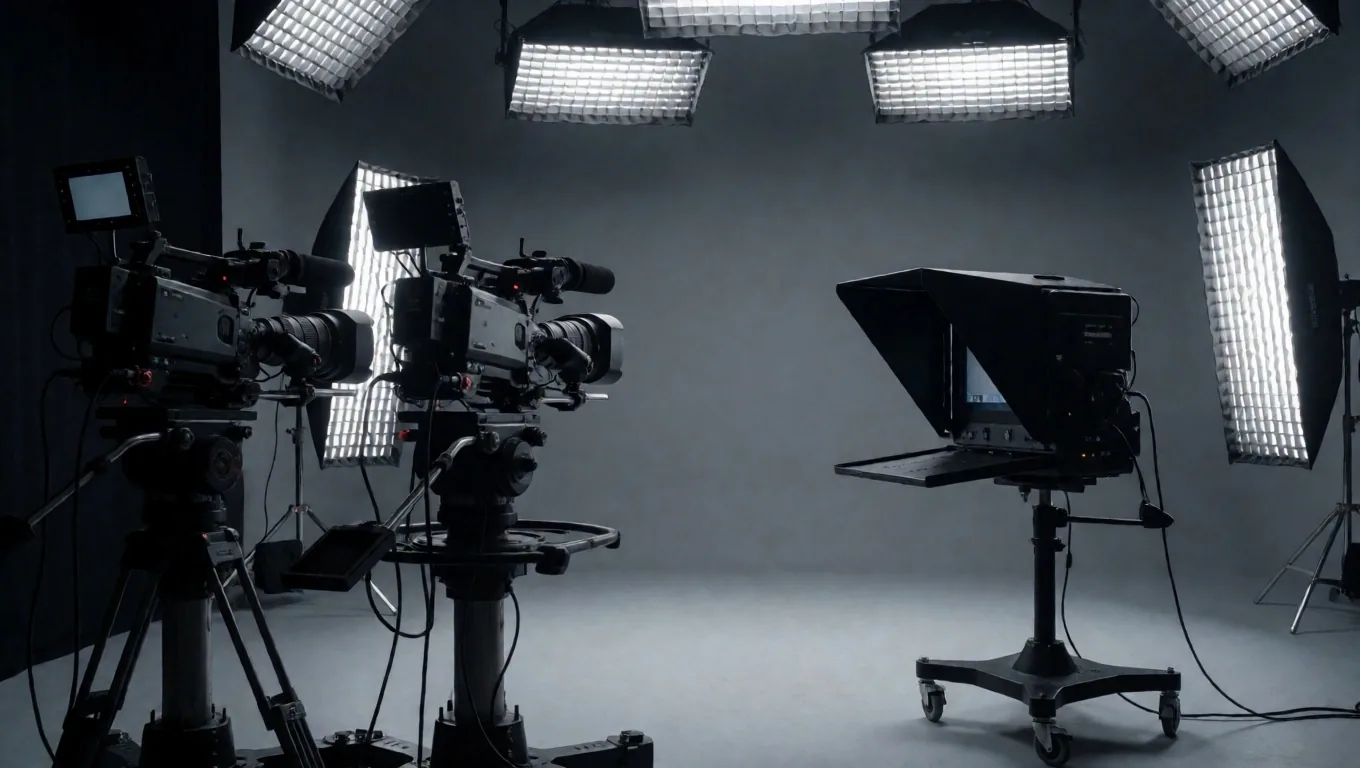
Media & TV Presentation: Conquering the Camera and Digital Screen
The media industry demands a very high standard of professionalism, where outward appearance must be supported by solid technical skills. We provide a bridge for those of you who want to pursue a career as a TV presenter, news anchor, or professional video content creator — familiarizing you with the studio environment, helping you appear natural in front of the camera, and mastering modern broadcasting tools.
Ten Studio Training Modules
Each module is designed sequentially — from basic control in front of the lens to live broadcasting with a technical team.
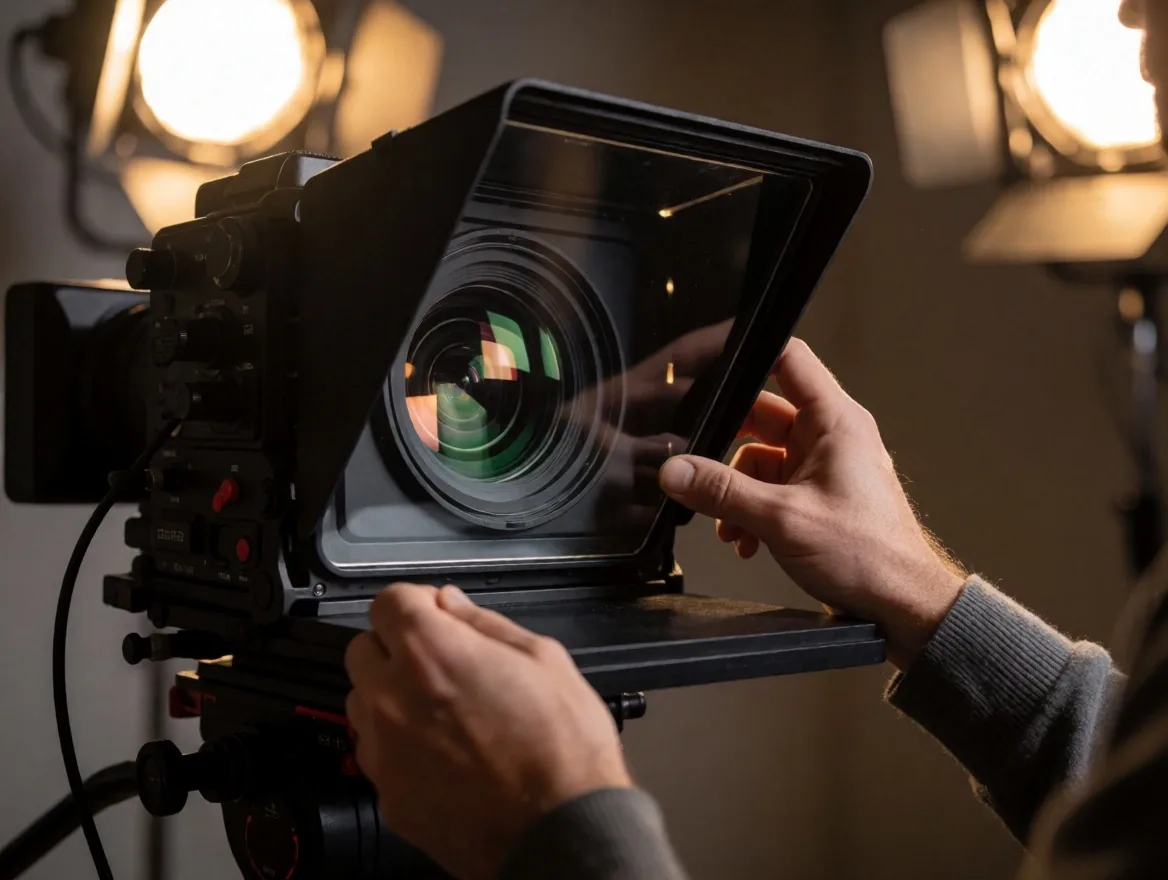
Basic Camera Techniques
Speaking in front of a camera lens is very different from speaking to people in person. Cameras tend to magnify movements and expressions, so extraordinary self-control is required.
We train you to maintain eye focus on the lens, manage the intensity of facial expressions so they do not look exaggerated, and apply thesmiling voicetechnique — a voice that sounds friendly yet authoritative to the audience's ears.
Natural Teleprompter Usage
A professional presenter must be able to read a script from a teleprompter without looking like they are reading. We train the coordination between your speaking speed and the script scroll movement, as well as improvisation techniques if there are technical issues with the device.
Synchronizing speaking speed with the teleprompter script scroll rate — eyes move naturally, not chasing the text.
Technique for covering technical issues — if the prompter stops, you keep flowing without the audience noticing the disruption.
Delivering long and complex information with a fluency that appears very natural to the audience at home.
Media Interview and Talk Show Techniques
Being a host or interviewer requires very sharp listening skills while still monitoring the broadcast duration.
Interview simulations with various types of interviewees will train your mental readiness in facing live broadcast situations.
Open-Ended Questions
Formulating questions that encourage interviewees to provide substantive answers, rather than just yes or no.
Spontaneous Responses
Techniques for responding to interviewee answers spontaneously without losing the direction of the conversation.
Flow Control
Controlling the conversation so it does not stray from the main topic, while still respecting the interviewee.
Time Management
Monitoring broadcast duration while listening — when to cut, when to delve deeper.
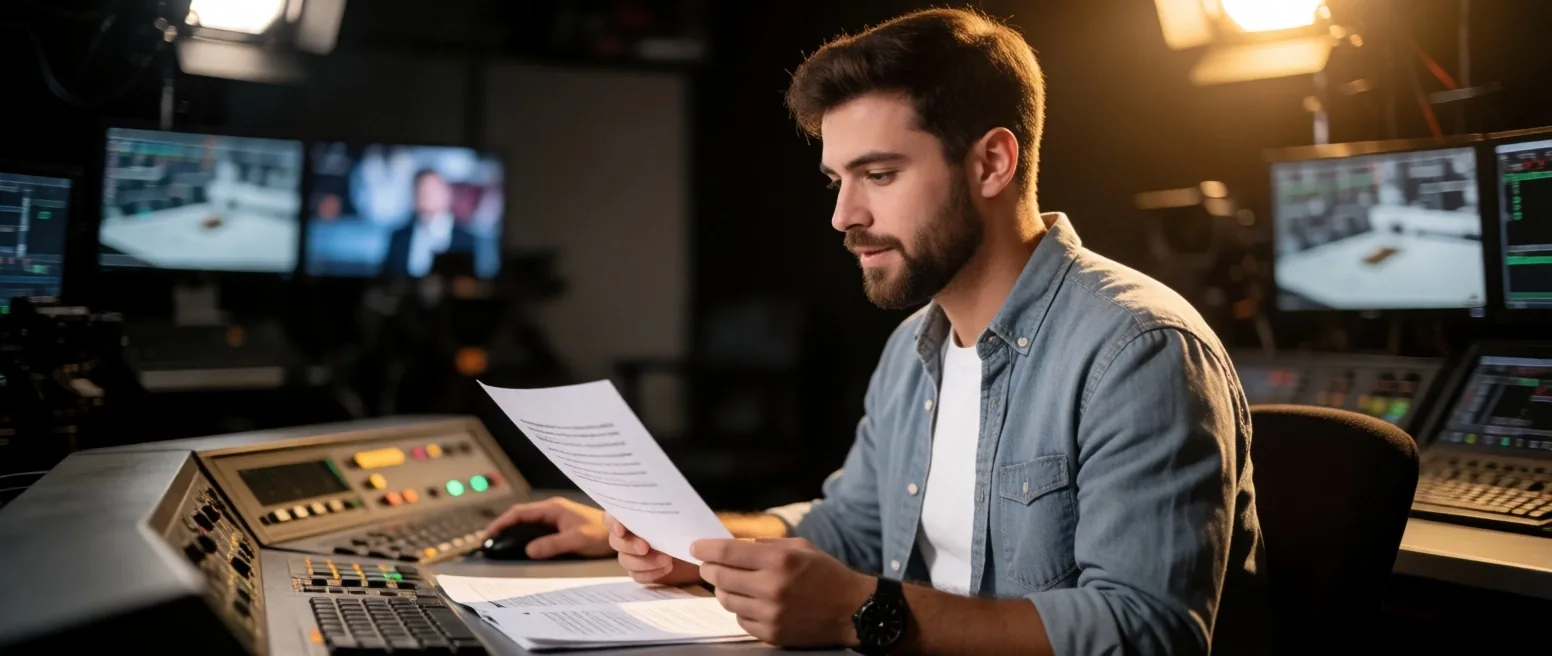
Broadcast Scriptwriting
A good presenter must also understand the structure of the scripts they read. We provide the basics of scriptwriting for news, language styles for entertainment programs, and copywriting for television or radio commercials.
Broadcasting Voice and Breathing Management
The broadcasting industry requires clear and stable vocal quality for long durations. Diaphragmatic breathing exercises ensure you do not easily run out of breath when reading long sentences. We also train vocal modulation techniques so that the voice can be adjusted to the type of program — serious formal news or relaxed lifestyle shows.
Makeup and Wardrobe for the Screen
Visuals are a key element in broadcasting, and your appearance must match industry aesthetic standards. We provide insights into choosing clothing colors that do not interfere with camera sensors — including avoiding small patterns or certain colors that clash with the background.
The basics of makeup for studio lighting requirements are also taught so that the face remains looking fresh and proportional on screen.
Podcast Moderation and Live Streaming Techniques
New media such as podcasts and live broadcasts on social media have a more relaxed dynamic but still require structure. We teach how to maintain energy during long audio recordings and techniques for interacting with the audience through the comment section in real-time.
This training also covers simple technical aspects such as correct microphone placement to get professional sound quality without noise interference.
Broadcasting Ethics and Law in Indonesia
Working in media means being bound by regulations such as the Journalistic Code of Ethics and the Broadcasting Code of Conduct (P3SPS). We provide a basic understanding of the boundaries of speaking in public spaces so that you avoid legal lawsuits or ethical violations.
Journalistic Code of Ethics
Basic boundaries in conveying public information — accuracy, independence, and accountability.
Broadcasting Code of Conduct (P3SPS)
Standard broadcasting practices for aired content — viewer protection, sensitivity, and factual accuracy.
Personal & Institutional Integrity
This ethical understanding is important for every media practitioner to maintain personal integrity and the integrity of the institution they represent.
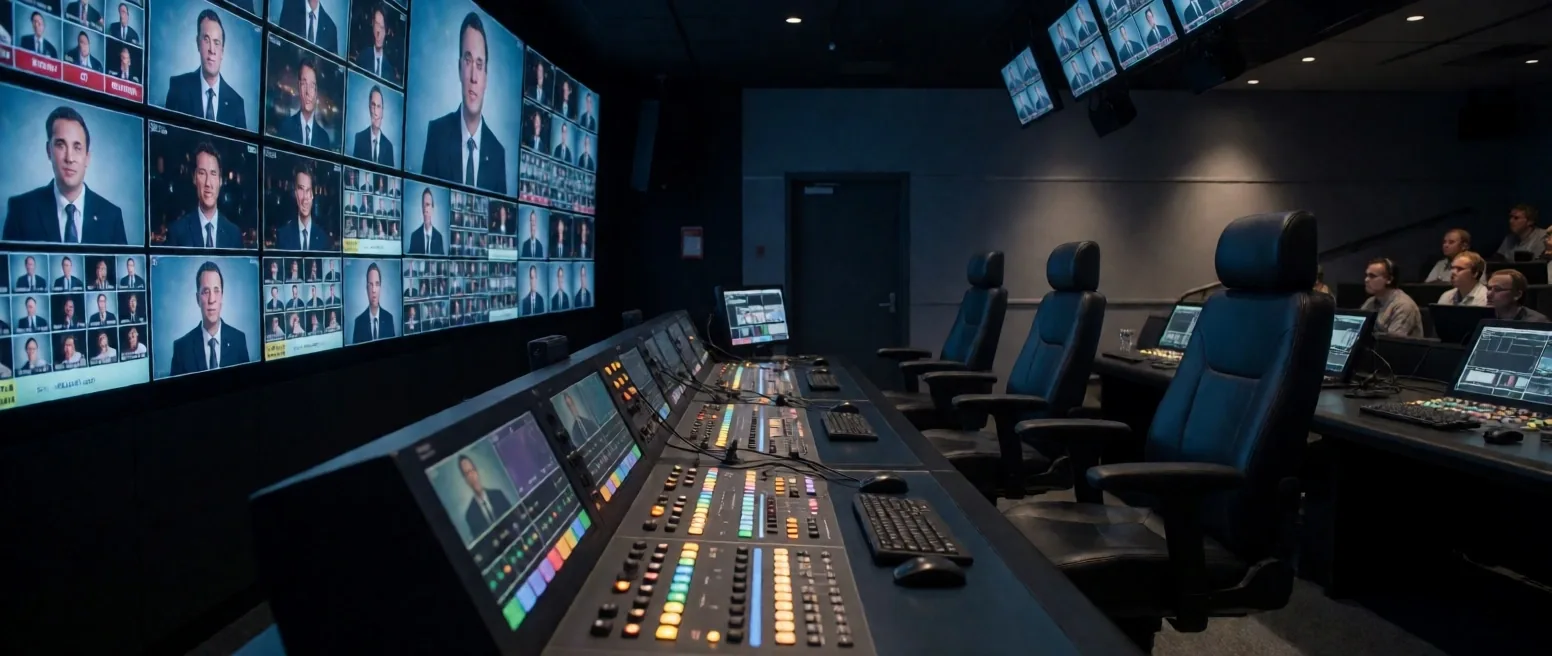
Live Broadcast Simulation
The culmination of this training is a live broadcast simulation in our studio, which is designed to resemble a real TV station control room. You will learn to work with a technical team, respond to instructions from the producer via an earpiece (IFB), and handle sudden technical errors calmly.
Technical Team Coordination
Working with cameramen, audio engineers, and switchers in a real broadcast rhythm.
IFB Instructions
Listening to producer directions via an earpiece while maintaining performance in front of the camera.
Handling Obstacles
Responding to sudden technical errors calmly — without the audience noticing.
Portfolio and Showreel Preparation
To get a job in the broadcasting world, you need tangible proof of your abilities. We help every student compile a professional showreel containing clips of their best performances during training at ASME Lab. This portfolio video will be professionally edited so it is ready to be sent to various television stations, media agencies, or used as capital to build a personal brand on social media.
Questions about Media & TV Presentation
Questions that often arise before registering for broadcasting classes. For comprehensive questions about registration, certification, and policies, visit the full FAQ page.
Do I need to have broadcasting experience before registering? +
No. Modules start from basic camera techniques for beginners, then gradually move toward live broadcast simulations. What is needed is the willingness to practice consistently.
What studio equipment do I use during training? +
You train in a studio equipped with broadcast cameras, teleprompters, professional lighting systems, audio rooms for podcasts, and control rooms that resemble a TV station. Full details are on the Studio Facilities page.
Is the showreel really edited professionally? +
Yes. The showreel is compiled from clips of your best performances during training, then edited by our team so it is ready to be sent to television stations, media agencies, or used to build a personal brand on social media.
Is this training suitable for social media content creators? +
Yes. The podcast and live streaming modules specifically discuss new media dynamics — maintaining energy during long recordings, interacting with audiences in real-time, and microphone placement for professional sound quality.
Start Your Media Career in Our Studio
Each module is designed to familiarize you with the studio environment and build confidence before auditioning in the actual media industry. Consult the schedule and class options with our team — no consultation registration fee.